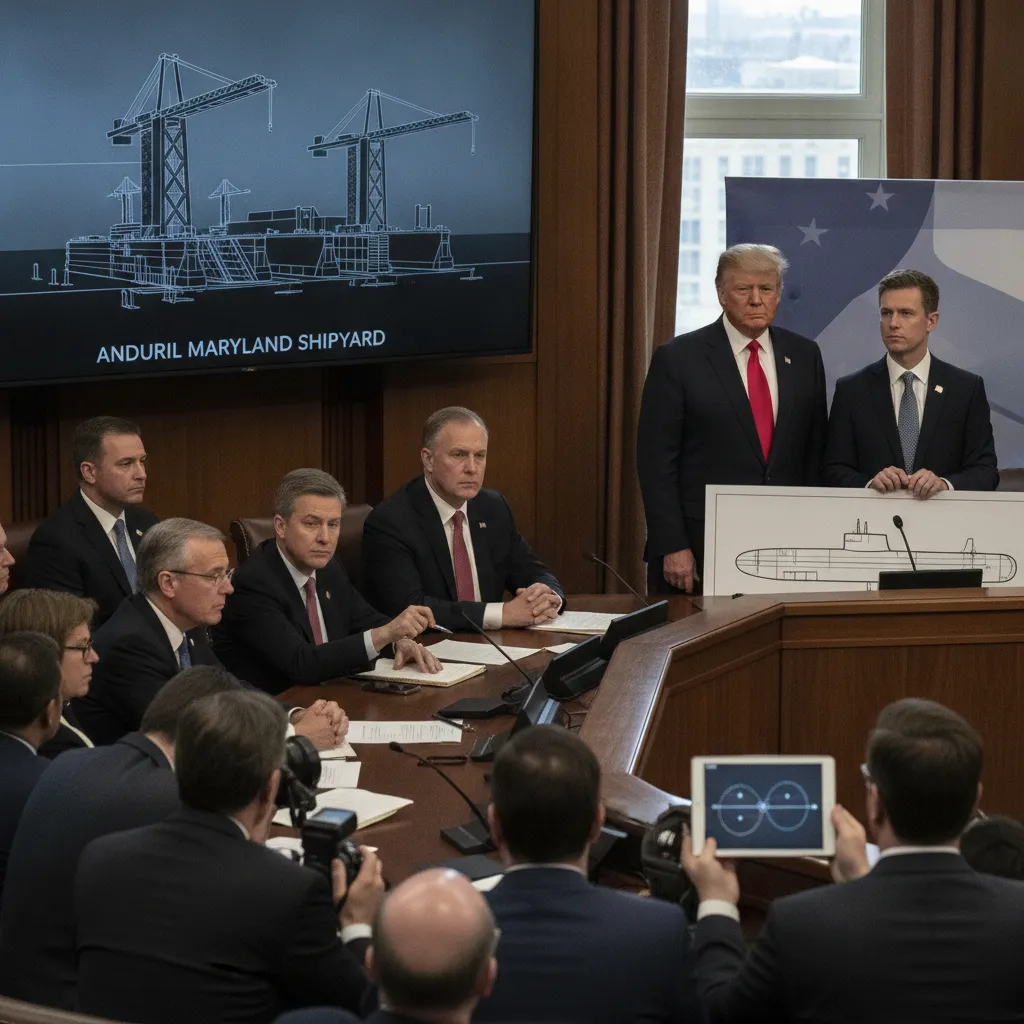
President Donald Trump and defense contractor Anduril Industries have unveiled plans for a 6.6 billion dollar shipyard in Maryland dedicated to manufacturing parts for Virginia class submarines. While the announcement promises a boost to national security infrastructure and local employment, it has reignited a heated debate among Congressional Democrats regarding potential conflicts of interest involving the president’s family. At the center of the controversy is 1789 Capital, a venture capital firm where Donald Trump Jr. serves as a partner.
Critics, including Representative Jamie Raskin, argue that 1789 Capital has shown an unusual knack for identifying companies just before they land massive government contracts or benefit from shifts in federal policy. Specifically, the firm invested 50 million dollars into Anduril as part of a much larger funding round last year. Lawmakers suggest these connections create an appearance of impropriety, claiming that political ties may be influencing the flow of taxpayer money toward specific defense entities.
Representatives for 1789 Capital have strongly denied these allegations, asserting that investment decisions are handled by a three person committee that does not include Donald Trump Jr. They maintain that their portfolio reflects a broader strategy to strengthen domestic supply chains rather than political maneuvering. Similarly, spokespeople for the Trump family have described the accusations as distortions of fact, noting that his sons have managed diverse business interests long before their father entered politics.
The Pentagon has also stepped in to defend its procurement process, insisting that no company receives preferential treatment based on outside affiliations or political connections. This sentiment was echoed by Anduril founder Palmer Luckey, who questioned why investment firms should avoid successful companies simply because a partner is related to a politician. Records show that Anduril has continued to win substantial contracts under both parties, suggesting its growth is driven by performance rather than patronage.